

A small step for Boulder.
A meaningful step for animal welfare.
Food System Animal Welfare Fund Initiative
Many Boulder residents care deeply about animal welfare and are concerned about the harms of factory farming, yet have limited ways to address those harms through local policy.
This measure creates a very small sales tax on grocery-store meat sold for home cooking and uses the money to fund programs that improve animal welfare. The revenue would go into a dedicated Food System Animal Welfare Fund and could only be used for evidence-based efforts that reduce suffering for animals raised or captured for food.
The tax is intentionally modest, about one cent for every ten dollars spent, and is not designed to change what people eat.
It does not apply to farmers’ markets or local producers and explicitly prevents funds from going to the animal agriculture industry, offering Boulder a practical and accountable way to turn shared values about animal welfare into meaningful action.
How much is the tax?
The tax is one-tenth of one percent (0.1%).
That means:
1 cent for every $10 spent on grocery-store meat
About 50 cents to $1 per person per year on average
Raises about $60,000 per year citywide
The tax is intentionally very small.
What food does it apply to?
The tax applies only to:
All meat products, including poultry and seafood
Sold at grocery stores
For home consumption (unprepared)
It does not apply to:
Farmers’ markets or local farm sales
Community Supported Agriculture (CSA) programs
Restaurants or prepared foods
Eggs or dairy products
Local farmers and farmers’ markets are explicitly excluded.
What would the money be used for?
Money from the fund can only be used for programs that:
Improve animal welfare
Reduce suffering of animals raised or captured for food
Are supported by evidence and measurable results
The City must use grants or contracts with nonprofits that are aligned with this purpose and must report publicly on how the funds are used.
Could the money go to factory farms or the animal agriculture industry?
No.
The measure explicitly prohibits funds from going to:
Meat or seafood producers
Industry trade groups
Organizations with financial ties to animal agriculture
Programs that promote or expand animal farming
Only organizations whose primary mission is improving animal welfare are eligible.
Is this trying to change what people eat?
No.
The tax is far too small to influence food choices and is not designed to discourage meat consumption. Its purpose is to raise modest funding to address well-documented animal welfare harms linked to the food system.
Why is Boulder doing this?
Many Boulder residents are concerned about:
Animal welfare
Factory farming practices
Ethical impacts of the food system
Because meat sold in Boulder comes from large regional and national supply chains, local consumption is connected to animal welfare harms that happen elsewhere. This measure gives Boulder a practical way to help address those harms.
Who decides which programs get funded?
The City will use neutral, evidence-based criteria to award funds and may consider research from independent animal-welfare evaluators. Outside organizations can provide guidance, but the City keeps full control over funding decisions.
Is this permanent?
No. The tax automatically expires after five years unless voters choose to renew it.
In one sentence
This measure adds a very small grocery-store meat tax to fund accountable, evidence-based animal welfare programs, while protecting local farmers, avoiding behavior change, and preventing money from going to the animal agriculture industry.
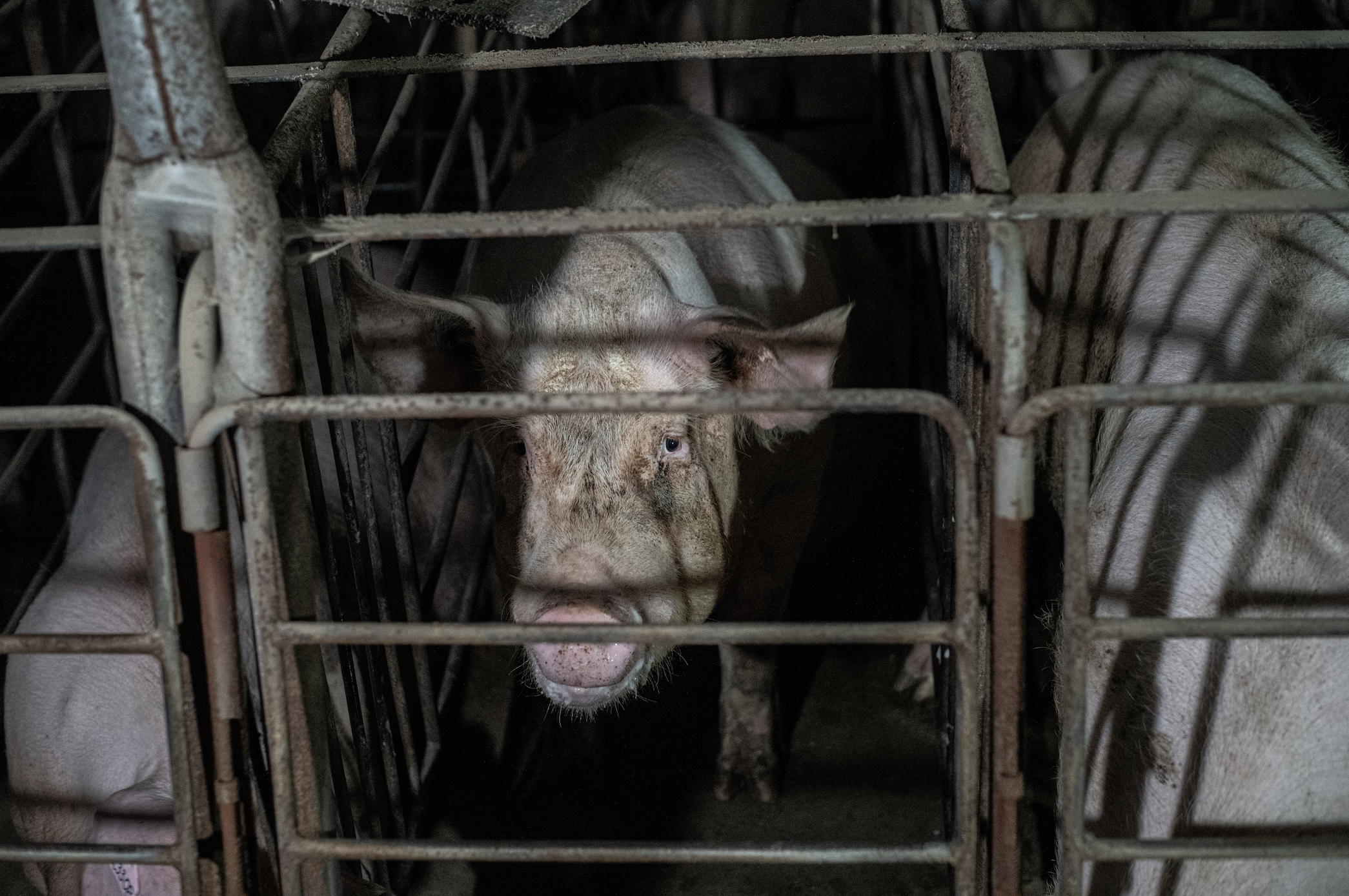
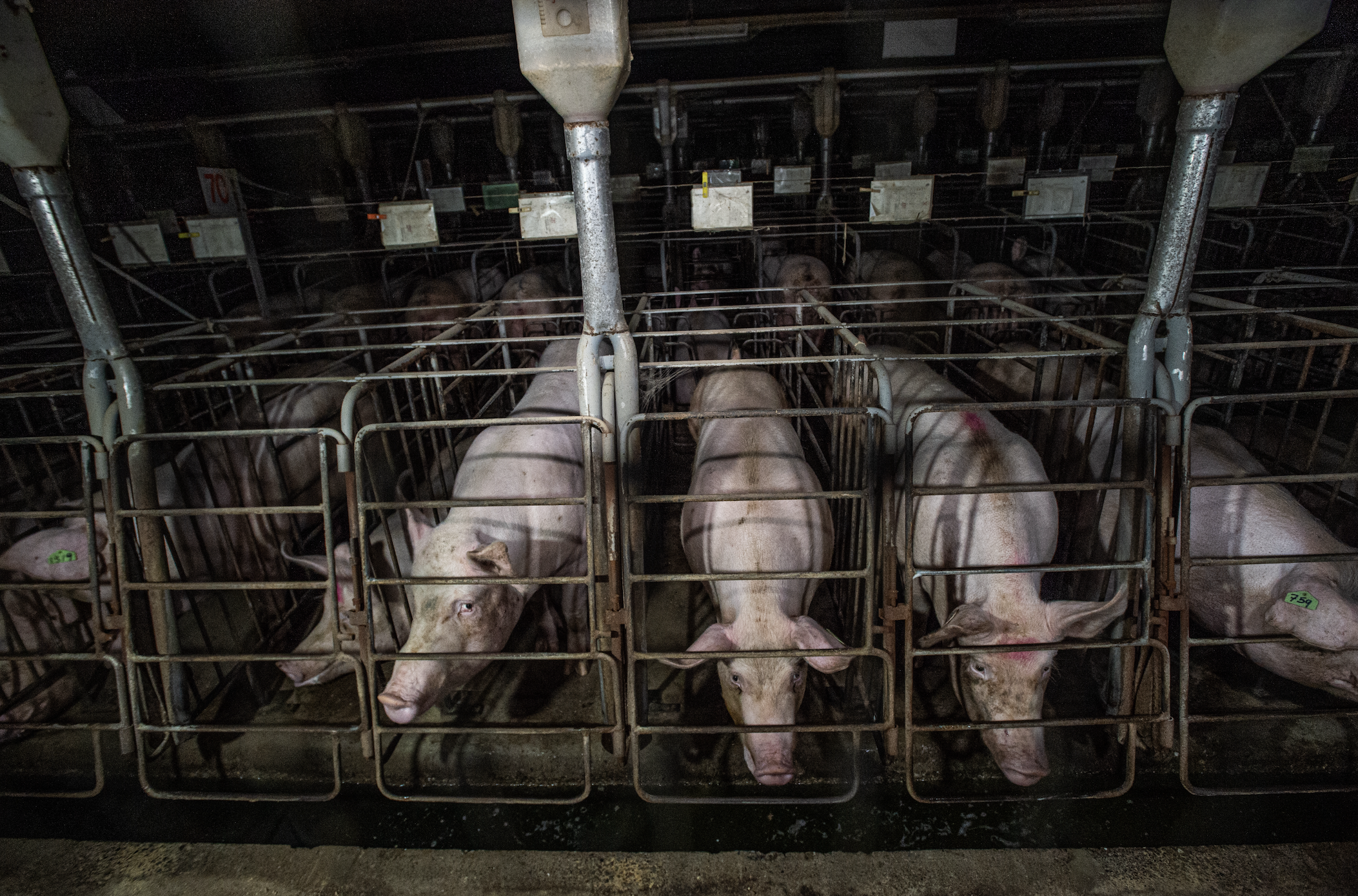
Mother Pigs in Gestation Crates during entire 4-month pregnancy